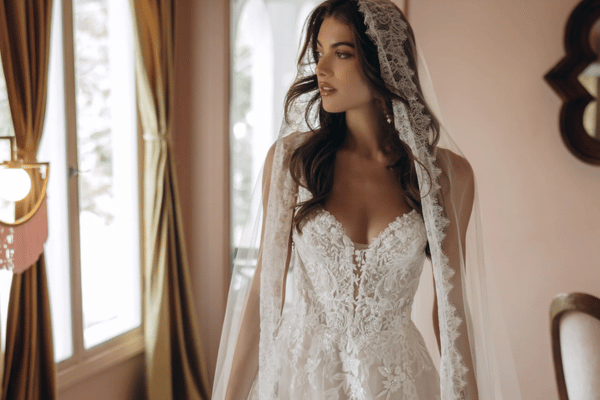

When you first try on your gown, you’ll probably notice that the train is one of its most striking features. It adds movement and drama, giving your bridal look an elegant, timeless feel. As beautiful as it is during the ceremony, however, that same train can become more difficult to manage once you’re walking, greeting guests, and dancing at the reception. That’s where a wedding dress bustle comes in. It allows you to enjoy the beauty of your train during the ceremony while making the rest of the day much easier to navigate.
A bustle is not necessary for every bride, but it can make a significant difference depending on your gown and wedding plans. Understanding when you need one, when you can skip it, and how different bustle styles work will help you choose the option that best suits your dress, venue, and reception.
What Is a Bustle?
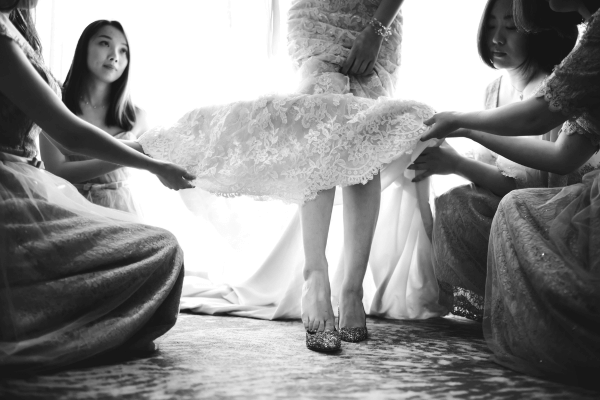
A bustle uses hooks, buttons, ribbons, or ties added during alterations to lift the train off the floor. When you secure the bustle, the train lifts off the floor and becomes easier to manage throughout the reception.
A seamstress typically adds the bustle during alterations and positions the attachment points carefully so they blend into the gown. This allows the dress to maintain its original appearance during the ceremony.
Do You Have to Bustle Your Wedding Dress?
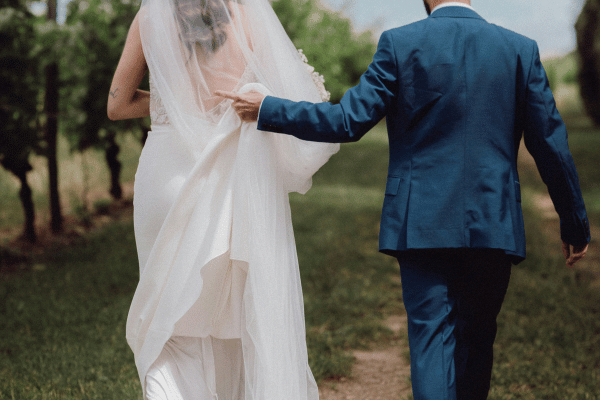
The short answer is no. A bustle is not necessary for every bride, and whether you need one depends on the length of your train and how you plan to wear your dress after the ceremony.
You will probably want a bustle if your dress has:
- A chapel, cathedral, or other long train
- Multiple layers of fabric that would be difficult to carry
- A fitted silhouette that makes walking with the train awkward
- A reception that includes dancing, mingling, or moving around the venue
You may be able to skip a bustle if your dress has:
- A sweep or brush train that barely extends beyond the hem
- A detachable train that you plan to remove after the ceremony
- A very small train that you can carry easily
- A simple silhouette that stays manageable without lifting the train
If you’re considering skipping a bustle, take a moment to picture the rest of your wedding day. Think about everything you’ll be doing during the reception, from walking around and greeting guests to dancing and taking photos. If you think your train will still be easy to manage throughout the celebration, you may not need a bustle.
Why Many Brides Choose a Wedding Dress Bustle
The biggest advantage is freedom of movement. When you secure the train, you can walk more naturally, dance more comfortably, and avoid others stepping on the fabric.
Other benefits include:
- Less wear and tear on the train during the reception
- Easier movement through narrow aisles, staircases, and crowded spaces
- A cleaner hemline that stays off the floor
- A slightly different silhouette for the reception, which some brides enjoy
When you secure the train, you can walk more naturally, dance more comfortably, and avoid others stepping on the fabric.
Common Bustle Styles
There is no single bustle that works for every gown. Your seamstress will usually recommend a style based on the fabric, silhouette, and weight of the train.
American (Over-Bustle)
Your seamstress lifts the train and attaches it to points on the outside of the gown. This creates soft folds that sit on top of the skirt.
Best for:
- Ball gowns
- A-line dresses
- Dresses with moderate to heavy trains
French (Under-Bustle)
Your seamstress tucks the train underneath the dress and secures it from the inside. The result is a more seamless look, with the fullness of the train hidden beneath the skirt.
Best for:
- Fit-and-flare gowns
- Mermaid silhouettes
- Dresses with elegant draping
Ballroom Bustle
Your seamstress lifts the train completely so the hem sits nearly floor-length all around, as if the dress never had a train.
Best for:
- Very full skirts
- Brides who want a clean, uniform hemline at the reception
Your seamstress may also suggest a custom mix of techniques if your dress has unusual construction, heavy embellishment, or a very long train.
How Much Does a Bustle Cost?
Bustle costs vary by location and design. A simple bustle may range from $50–$150, while styles that require multiple attachment points usually sit at a higher price point.
Ask your seamstress for an estimate during your first fitting. The cost usually depends on:
- Train length
- Fabric weight
- Number of bustle points required
- Complexity of the gown’s construction
What to Expect During Alterations
A seamstress typically adds the bustle during one of the later fittings after the hem and other alterations are complete.
Your seamstress will usually:
- Pin potential bustle points
- Test how the train lifts and drapes
- Adjust the placement for balance and comfort
- Install the final hooks, buttons, or ties
Bring the shoes and undergarments you plan to wear on the wedding day. You should have the bustle fitted while wearing your full bridal look so the train hangs correctly.
Don’t Forget the Bustle Tutorial
One of the most overlooked wedding-day details is learning how the bustle actually works. The attachment points are not always visible, and the process can feel confusing if no one has practiced it with you.
Before you leave your final fitting:
- Ask your seamstress to demonstrate the bustle.
- Have your maid of honor, parent, or another helper watch closely.
- Take photos or a short video of the steps.
- Practice fastening and unfastening it at least once.
This small preparation can save a surprising amount of stress on the wedding day.
When Is a Bustle Especially Helpful?
Even if you are unsure whether you need one, a bustle is often worth considering for:
- Outdoor receptions where the train would collect dirt or grass
- Venues with stairs or uneven flooring
- Long receptions with lots of dancing
- Heavy satin, mikado, or layered tulle gowns
- Cathedral-length trains
In these situations, the added mobility usually outweighs the extra alteration cost.
Enjoying Your Dress From Ceremony to Reception
A bustle is not a requirement, but it is often one of the most practical alterations you can add to a gown with a train. It allows you to enjoy the dramatic look of the train during the ceremony and still move comfortably through the reception.
If your dress has a substantial train, ask your seamstress to show you the bustle options during alterations. Seeing how the gown looks both with and without the bustle usually makes the decision much easier.
Find Your Wedding Dress at Twirl Bride
At Twirl Bride, we help brides think through these details long before the final fitting. When you try on gowns, our team can explain how different train lengths, fabrics, and silhouettes affect bustle options so you can choose a dress that feels beautiful during the ceremony and comfortable throughout the celebration.
Book an appointment to explore gowns and get personalized guidance on fit, alterations, and reception-ready styling.