
The moment you step into a wedding dress, you notice more details than just its appearance. You feel how it settles on your body, how it moves when you walk, turn, sit, or breathe. Much of that experience comes down to one often overlooked detail: fabric weight.
Understanding fabric weight can change how you choose your gown. It influences comfort and structure throughout the day. While silhouettes and embellishments often get the spotlight, fabric weight quietly shapes your dress from the aisle to the dance floor.
This guide breaks down what fabric weight really means, how it affects the way a wedding dress moves and feels, and how to use this knowledge to make a more informed choice.
What Fabric Weight Actually Means
Fabric weight refers to how heavy or light a material feels, usually determined by how tightly it is woven, the fibers used, and the thickness of the fabric. In bridal gowns, fabric weight is not measured by numbers on a scale but by how the material behaves when worn.
Lightweight fabrics tend to float, drape, and move easily. Heavier fabrics offer structure, shape, and presence. Neither is better than the other. The right choice depends on how you want your dress to feel on your body and how you want it to move with you throughout the day.
Many brides are surprised to learn that two dresses with similar silhouettes can feel completely different if they are made from fabrics of different weights.
Why Fabric Weight Matters More Than You Think
Fabric weight affects nearly every part of your wedding dress experience. It influences how long you can comfortably wear the gown, how it photographs, and how natural your movements feel.
Here are a few ways fabric weight quietly shapes your day:
- How easily you can walk, sit, and dance
- How much structure or softness the gown provides
- How warm or breathable the dress feels
- How the skirt responds to motion
- How the dress holds its shape over time
When fabric weight works with your body and your plans, the dress feels supportive rather than restrictive.
How Lightweight Fabrics Move and Feel
Lightweight fabrics are often associated with softness, ease, and flow. These materials respond quickly to movement and tend to feel less restrictive on the body.
Common Lightweight Bridal Fabrics
- Chiffon
- Tulle
- Organza
- Soft lace
- Georgette
These fabrics are frequently chosen for their airy quality and effortless drape.
How Lightweight Fabric Weight Affects Movement
Lightweight fabric weight allows the dress to move with you rather than around you. Skirts sway easily, layers float, and the gown feels responsive as you walk or turn. This can create a soft, romantic look in motion, especially during the ceremony or outdoor photos.
Because the fabric does not resist movement, you may feel more freedom when walking down the aisle or navigating stairs.
How Lightweight Fabric Weight Feels on the Body
Lightweight gowns often feel less physically demanding to wear. They place less pressure on your shoulders and waist and are generally easier to manage for extended periods.
However, lighter fabrics may offer less natural structure. This means support often comes from construction elements like boning, lining, or layering rather than the fabric itself.
How Heavier Fabrics Move and Feel
Heavier fabrics bring a different experience. They tend to feel more substantial and provide a sense of grounding and shape.
Common Heavier Bridal Fabrics
- Satin
- Mikado
- Taffeta
- Brocade
- Heavy crepe
These fabrics are often chosen for clean lines, architectural silhouettes, or gowns with a more formal presence.
How Heavier Fabric Weight Affects Movement
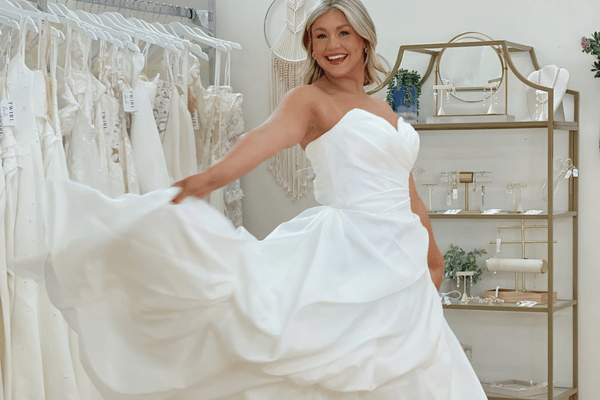
Heavier fabric weight creates more controlled movement. Skirts move with intention rather than floating freely. This can make each step feel deliberate and elegant, especially in structured gowns like ball gowns or fitted silhouettes.
The fabric may not sway as much, but it holds its shape beautifully as you move.
How Heavier Fabric Weight Feels on the Body
Heavier fabrics often feel structured and secure. They can gently flatter your figure, hold shape, and feel stable on your body. Because these fabrics are thicker, they can feel warmer and may require a little extra care when moving, especially during long events or dancing.
Fabric Weight and Dress Silhouette
Fabric weight and silhouette work together. Certain silhouettes naturally pair better with specific fabric weights.
Flowing Silhouettes
A-line, empire waist, and soft sheath dresses often benefit from lighter fabric weight. These silhouettes rely on drape and movement rather than structure.
Structured Silhouettes
Ball gowns, fit-and-flare styles, and corseted dresses often use heavier fabrics to maintain shape. The fabric weight supports the silhouette and helps it hold its form throughout the day.
Trying the same silhouette in different fabric weights can show just how much the material changes the experience.
How Fabric Weight Affects Comfort Throughout the Day
Your wedding day includes standing, walking, sitting, hugging, eating, and dancing. Fabric weight plays a big role in how comfortable those moments feel.
Lightweight gowns often feel easier during warmer weather or outdoor ceremonies. Heavier gowns may feel more comfortable in cooler environments or formal indoor settings.
Comfort is not only about temperature. It is also about how the dress responds to movement and how much effort it takes to wear it for hours at a time.
Fabric Weight and Temperature Considerations
Fabric weight affects how breathable a dress feels. Lightweight fabrics tend to allow more airflow, while heavier fabrics can trap warmth.
This does not mean heavier gowns are always uncomfortable. Lining, construction, and fit all matter. Still, fabric weight is an important factor when considering season and venue.
A summer outdoor ceremony may call for a lighter fabric weight, while a winter ballroom wedding may feel perfect in something more substantial.
How Fabric Weight Impacts Alterations and Fit
Fabric weight also affects how a dress can be altered. Heavier fabrics often hold seams and structure more firmly, which can be helpful for shaping and support. With lighter fabrics, alterations or adjustments are more visible, so any changes made during fittings show up more clearly than they would on a heavier fabric.
This is another reason why understanding fabric weight early can help set expectations during fittings.
Choosing Fabric Weight Based on Your Personal Preferences
There is no correct fabric weight for every bride. What matters is how the dress feels to you.
Ask yourself:
- Do you prefer a dress that feels barely there or one that feels structured and secure?
- Do you like soft movement or controlled shape?
- Will you feel more comfortable in something light or something substantial?
Pay attention to how your body responds when you try on different fabrics. Often, your instinctive reaction tells you more than mirrors alone.
How to Evaluate Fabric Weight During Your Appointment
When trying on gowns, notice more than just the visual details.
- Walk around the room
- Sit down and stand up
- Turn and sway slightly
- Pay attention to pressure points
Fabric weight becomes most noticeable when you move. This is where the difference between a dress you admire and a dress you enjoy wearing becomes clear.
Why Fabric Weight Influences Confidence
Confidence often comes from ease. When a dress moves naturally with you and feels comfortable, you are less likely to fidget or adjust it throughout the day.
Fabric weight that suits your body and your plans helps you stay present rather than distracted by how the dress feels. That quiet comfort often shows in posture, movement, and photos.
Bringing It All Together
Fabric weight may not be the first thing you notice when browsing wedding dresses, but it plays a major role in how your gown feels and functions. From movement and comfort to structure and temperature, fabric weight shapes your experience in ways that go far beyond appearance.
Understanding this detail gives you more control during your dress search and helps you make choices that support both your style and your comfort.
Finding the Right Fabric Weight at Twirl Bride

When you are ready to explore wedding dresses in person, having guidance makes all the difference. At Twirl Bride, our stylists help you understand how fabric weight interacts with fit, silhouette, and movement so you can make a confident, informed choice.
During your appointment, you will have the opportunity to experience different fabrics firsthand, compare how they move and feel, and find the gown that aligns with both your vision and your comfort.
Book your appointment at Twirl Bride and discover how the right fabric weight can transform the way your wedding dress feels on your big day.